
Kinesiology stress release techniques
 Understanding stress patterns and release
Is there a problem with your spouse, colleague, child, boss, or neighbor? For some reason or other, do you find yourself always in the same old unpleasant situation, confronting the same type of people with whom you have difficulty and unease? Until we can solve these problems, we’ll get the same situations, people, and problems again and again.
Usually, a coping strategy—or lack thereof—originating from childhood lies behind these recurring issues. The problem causes stress, and that stress starts to be stored in your body. Wherever stress resides, it creates a block that hinders the free flow of energy. Over time, this can lead to physical pain, sickness, or illness.
In a kinesiology session, you can step back and observe your behavior in these situations from a broader perspective. You may even view the problem from the other person’s point of view. This allows you to choose a new coping strategy, which then requires practice to integrate.
Let’s say you always react the same way in a specific situation.
Your mind starts looping around the problem, creating imaginary worst-case scenarios and carving them deeper into your subconscious.
This repetitive stress tightens your muscles, affects your posture, and eventually manifests as physical symptoms.
In a kinesiology session, we delve into the root of the issue to release it, replacing it with positive, empowering thoughts. This shift requires practice—at least 21 days—to establish new behavioral patterns. Just think about how many days you’ve spent reinforcing old, unhelpful thoughts! Homework is often part of this process, helping you build healthier, more constructive habits.
Kinesiology exercises: useful tips to release stress
Kinesiology is a powerful yet gentle approach to stress management and energy balancing. By utilizing specific 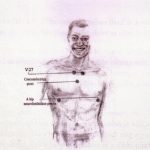 techniques, it helps harmonize the body’s energy flow and enhance overall well-being. These exercises are designed to release stress, boost concentration, and improve emotional and physical balance. Choose the techniques that resonate most with you and integrate them into your daily routine for lasting benefits.
Physical s.o.s. exercises
- Deep Breathing: Inhale deeply several times, even adding a big sigh. Shallow breathing intensifies stress, while slow, deep belly breathing releases tension and fosters relaxation. Focus on your breathing: listen to it, feel the air flowing in and out through your nose.
- Stay Hydrated: Drink a glass of water. Water is a powerful stress-relief tool, helping to keep you hydrated and balanced.
- Activate Forehead Points: Bring your four fingers together and touch your forehead above your eyebrows. Inhale and exhale deeply. This technique unlocks blocks in the conscious associative area of the brain, enhancing your ability to respond appropriately and breaking free from old habits.
- Pull Energy: If you feel drained, draw energy from your surroundings or nature. Place 2-4 fingers on your forehead, between your eyebrows, and gently push the skin upward. While inhaling, imagine pulling energy through your soles, legs, and up to the top of your head. Exhale, imagining the energy leaving as vapor.
- Forehead and Nape Hold: Place one hand on your forehead and the other on the back of your head above the nape. Take deep breaths. This posture releases emotional stress and helps bring unconscious processes to light.
- Practice Abdominal Breathing: Whether standing, sitting, or lying down, lower your shoulders and place both hands on your stomach. Breathe deeply, imagining inflating a balloon in your abdomen. Abdominal breathing increases oxygen intake, boosting brain capacity and relaxation.
- Calm the Abdominal Center: With slow abdominal breathing, gently circle your hands clockwise around your navel. This technique soothes and centers the body.
- Chi Kung Energy Practice: Learn how to create a Chi ball and move energy with it.
- Blowing a Balloon: Visualize a balloon. Blow all your stress, negative thoughts, and unnecessary burdens into it, one by one. When the balloon is full, tie it off and imagine it flying away, taking your stress with it.
- Relax Your Shoulders: Stress often causes us to pull our shoulders up, leading to tension in the neck muscles. To release this tension, rotate your shoulders:
- Pull them up three times.
- Press them forward three times toward your chest.
- Stretch them back three times.
- Finally, twist them back and forth.
The cross crawl

Helps the crossover of energy between the brain’s right and left hemispheres, it will help you:
- feel more balanced
- think more clearly
- improve your coordination
- harmonize your energies
This is a simple “marching” technique: while standing, lift your right arm and left leg and as you let them down, raise your left arm and right leg. You can even cross them in front of your body. Continue doing this at least for 1 minute, breathing in through your nose and out through your mouth. When energy is unable to cross over your left and right side, it slows down. This ability is aroused in babies when they begin to crawl. This is one of the reasons learning disabilities appear later more often with babies who couldn’t crawl. Walking, running, swimming also give us the possibilities to practice cross crawl.
Cook posture
This exercise was named after Wayne Cook, one of the forefathers of kinesiology. It helps you when you are overwhelmed, hysterical, confused, upset or over exhausted. It can help you to:
- untangle inner chaos
- see clearly, be more concentrated
- think clearly, sooth your mind
Start Your Healing Journey Today
Are you ready to experience the transformative power of kinesiology?
📧 Email: madubala.dd@gmail.com
Message me on the bottom of this page to book your session.
Take the first step towards a healthier, more balanced life. Your body knows what it needs—let kinesiology help you unlock its full potential!